
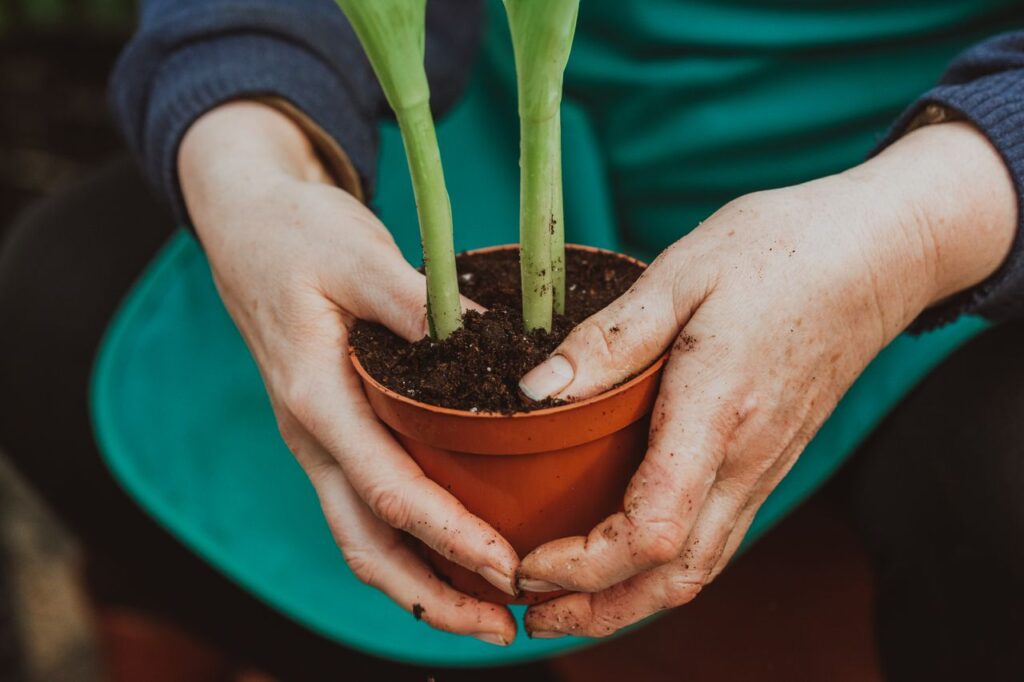
Image 1 Caption: Always test soil moisture halfway between the plant’s main stem and the pot rim to avoid damaging primary feeder roots.
Image 2 Caption: For pots deeper than eight inches, use a wooden skewer to check moisture near the very bottom of the root ball.
I used to be completely obsessed with plant technology. When I first started collecting indoor tropicals, I bought a sleek digital soil moisture meter equipped with a long metallic probe, convinced it was my ultimate insurance policy against root rot.
A few months into my journey, my beloved Peace Lily started drooping heavily, its leaves wilting right before my eyes while the screen proudly displayed “PERFECT MOISTURE.”
Confused, I pushed my index finger two inches straight down into the potting mix and found bone-dry, hydrophobic soil around the root ball—the meter had been measuring salt buildup from my fertilizer rather than actual water.
That frustrating afternoon was the exact day I tossed the gadgets into a dusty drawer and embraced the most reliable tool in indoor gardening: The Finger Test.
In this guide, I will break down why this simple sensory method beats electronic sensors every single time, how to read tactile soil cues like an experienced grower, and how to adapt your technique across different plant families.
Why Moisture Meters Fail
Budget soil meters seem scientific on the surface, but most affordable models do not actually measure liquid volume. Instead, they operate by measuring electrical conductivity between two metallic points on the probe.
This design creates a massive flaw for indoor plant parents. If your potting mix contains elevated mineral levels from hard tap water or recent fertilizer applications, the electricity flows far more freely.
This tricks the device into giving a “wet” reading even when the central soil core is completely parched and gasping for hydration.
On the flip side, modern chunky potting mixes packed with orchid bark, perlite, pumice, and charcoal leave empty air pockets throughout the container.
When the thin metal probe lands in one of these air gaps, it cannot establish a proper connection, registering a false “dry” reading that tricks you into overwatering an already soaked plant.
The Power of Human Touch
Your skin, unlike a cheap sensor probe, instantly registers temperature, surface resistance, and subtle moisture shifts.
By inserting your finger directly into the root zone, you receive an immediate, multi-sensory feedback loop that digital displays simply cannot replicate.
You can instantly tell the difference between chilly damp soil and dry compaction, allowing you to make accurate care decisions every single time.
How to Perform the Finger Test Step-by-Step
Sticking your finger into dirt might sound completely self-explanatory, but doing it correctly requires paying attention to a few crucial sensory details.
This ensures you don’t accidentally snap delicate root systems or misread the moisture signals.
- Locate the Safe Zone: Slide your index finger into the soil roughly halfway between the main stem and the inner rim of the planter to protect primary taproots.
- Reach the Proper Depth: Push down firmly until the soil line reaches your second knuckle (roughly 1.5 to 2 inches deep) to get past surface evaporation.
- Pinch and Evaluate: Gently pinch a small sample of soil between your thumb and index finger down at that depth, then carefully pull your hand back out to evaluate what you feel.
Decoding What Your Fingertip Feels
- Saturated and Wet: The potting mix clings heavily to your skin, leaves a dark mud residue, and feels distinctly cold and dense. Action: Hold off on watering completely and check back in four to five days.
- Damp and Cool: The soil feels cool to the touch, crumbles slightly under light pressure, and leaves a fine dusting of dirt on your skin without feeling sticky. Action: Ideal for moisture-loving tropicals; hold off for succulents.
- Bone Dry and Warm: The dirt feels warm, powdery, or crusty, sliding off your skin without leaving any damp residue behind. Action: It is time for a thorough, deep watering session.
Looking for other ways to test your soil? Watch the practical video guide below to see these alternative moisture testing methods in action!
Tailoring Moisture Checks to Specific Plant Families
Not all houseplants want their potting mix to dry out to the exact same depth before receiving a fresh drink from your watering can.
Understanding the natural habitat of your plants helps you tailor your finger test routine accurately across your entire collection:
| Plant Category | Popular Examples | Target Moisture Depth | When to Water |
| Drought Lovers | Succulents, Cacti, Snake Plant, ZZ Plant | 100% Dry Core | Soil feels completely dry all the way down |
| Moderate Dryers | Monstera, Pothos, Philodendron, Hoya | Top 50% Dry | Soil feels bone dry down to your second knuckle |
| Moisture Lovers | Calathea, Ferns, Fittonia, Peace Lily | Top 25% Dry | Top inch feels dry, but cool and damp below first knuckle |
| Epiphytes | Phalaenopsis, Air Plants, Tropical Cacti | Fast-Draining Bark | Bark or sphagnum moss feels completely crisp and dry |
Deep Pot Workarounds
As brilliant as the finger test is for everyday care, it encounters physical limitations in extra-large floor planters.
In a giant ten-gallon container housing an eight-foot Fiddle Leaf Fig, checking the top two inches only tells you about surface evaporation while the bottom ten inches could still be submerged in stagnant water.
To solve this, use the Wooden Skewer Trick. Insert a clean wooden chopstick deep into the planter near the base and leave it inserted for two minutes.
If the wood comes out dark, damp, and cool to the touch, the deep root zone is still wet, but if it comes out pale and clean, it is time to soak the pot.
Root-Bound Workarounds
When a plant outgrows its pot, its dense root mass packs together so tightly that pushing a finger into the soil without snapping roots becomes nearly impossible.
In these crowded conditions, trying to force your finger downward can damage vital feeder roots and cause unnecessary transplant shock.
Instead, master the Lift Method by getting accustomed to the physical weight of your planter when it is freshly watered versus when it is completely dry.
Lifting the pot gives you an instant, highly accurate read on total moisture content without disturbing a single root inside the container.
Ditch the Gadgets and Connect with Your Soil
Transitioning away from electronic gadgets in favor of the finger test is one of the most rewarding steps you can take as an indoor gardener.
It encourages you to slow down, build a real connection with your green companions, and develop a natural feel for your home’s unique microclimate throughout the year.
You will quickly learn how changing seasons, ambient indoor heating, and room humidity impact your soil’s drying time without ever needing a battery-powered screen.
The next time you do your weekly plant rounds, leave the digital meters in the drawer, roll up your sleeves, and let your natural senses guide your care routine toward a healthier indoor jungle!
Ready to unlock more secrets to keeping your houseplants thriving? Jump over to our main blog section to explore our favorite soil recipes, DIY pest remedies, and seasonal care guides made for plant parents of all levels!
 Small Spaces
 Turn your small space into an urban jungle! Discover step-by-step how to build a mess-free, freestanding living green wall divider for ultimate apartment privacy.
 Plant Care
 Dust is a silent killer! Learn step-by-step how to clean houseplant leaves naturally to boost photosynthesis, prevent pests, and restore vibrant shine.
 Plant Care
 As a pet owner, bringing new plants into your home can feel like a risky game. Curiosity often gets the […]
