
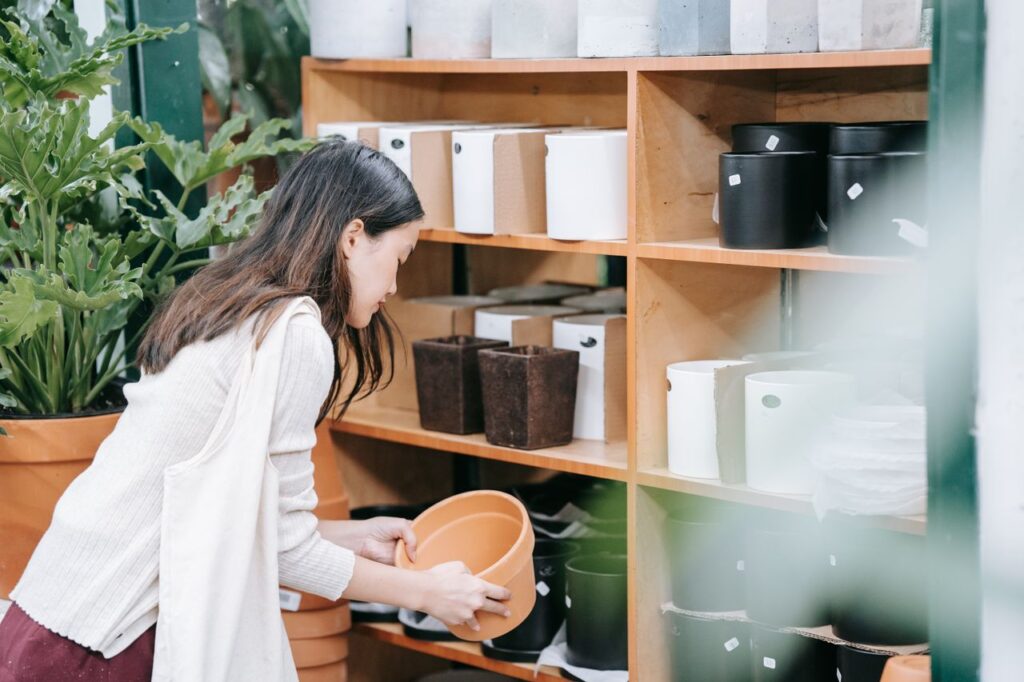
I learned the hard way that picking a plant pot isn’t just about what looks pretty on a decorative plant stand.
Early in my indoor gardening journey, I bought a massive, stunning ceramic container for a young Pothos that was barely six inches tall, assuming that giving it extra “room to grow” would save me from repotting later.
Two weeks later, the poor plant was drowning because that massive volume of wet soil held onto water for nearly a month, suffocating the tiny root system.
That embarrassing mistake taught me a fundamental lesson: choosing the correct pot size is a delicate balance between subterranean root biology and living room real estate.
In this guide, I will share the simple sizing rules I use to keep my plants healthy without turning my living space into an impassable obstacle course.
The Golden Sizing Rule: The 2-Inch Step Up
The single most common mistake plant parents make is upsizing their pots too drastically.
When you move a plant into a container that is far too large, the excess soil acts like a giant water-logging sponge around the tiny root ball.
Because the roots cannot absorb that massive volume of liquid quickly enough, the soil stays wet for weeks on end.
This starves the roots of oxygen, creates compacted dirt, and invites root rot fungi to take over the container.
How to Size Up Correctly
- For Small to Medium Pots (Under 10 inches): Increase the pot diameter by 1 to 2 inches maximum. If your plant is currently in a 4-inch nursery pot, move it into a 5 or 6-inch pot.
- For Large Floor Planters (Over 10 inches): Increase the pot diameter by 2 to 3 inches. A 10-inch Fiddle Leaf Fig should move up to a 12-inch planter.
Clear Signs Your Plant Needs a Bigger Container
Before you run out to buy new planters, you need to confirm that your plant actually needs an upgrade.
Most tropical species prefer to be slightly root-bound rather than floating in a sea of empty, wet soil.
Look for these clear visual cues before sizing up your planter:
- Roots Escaping: Feeder roots are poking out through the bottom drainage holes or coiling tightly around the top surface layer.
- Water Runs Straight Through: When you water, liquid flushes through the bottom holes almost instantly because roots have replaced all the soil.
- Stunted Growth & Fast Drying: The plant stops pushing out new leaves, or the soil dries out completely within twenty-four hours of a heavy soak.
Container Size vs. Plant Root Volume
To help you visualize how pot dimensions correlate with plant maturity, here is a quick reference guide I use when planning my collection layout:
| Pot Diameter | Root Ball Size | Ideal Plant Stage | Recommended Room Placement |
| 4 to 6 Inches | Compact / Young Roots | Propagation cuttings, small succulents, starter tropicals | Windowsills, desks, narrow wall shelves |
| 8 to 10 Inches | Medium / Establishing | Bushy Pothos, mature Calatheas, medium Monsteras | Side tables, plant stands, kitchen counters |
| 12 to 16 Inches | Large / Deep Root System | Mature Fiddle Leaf Figs, Rubber Trees, Bird of Paradise | Empty room corners, living room floor space |
How Pot Materials Impact Sizing Choices
The material of the pot you select directly influences how moisture evaporates, which changes how forgiving a larger pot size will be.
Terracotta and unglazed clay pots are porous, allowing air and moisture to pass freely through the container walls.
This means you can sometimes get away with a slightly larger pot because the clay helps dry out the soil faster.
Conversely, plastic, metal, and glazed ceramic planters trap 100% of soil moisture inside the container.
When using non-porous planters, sticking strictly to the 1-inch or 2-inch sizing rule is crucial to prevent stagnant water buildup at the bottom.
How to Scale Pots Without Cluttering Your Space
One of the biggest challenges in indoor urban gardening is managing visual footprint.
As your plants grow into larger pots, your living space can quickly begin to feel cramped and cluttered.
Here are two visual tricks I use to keep my floor space open while accommodating larger containers:
1. Go Vertical with Tapered Planters
Instead of wide, bowl-shaped pots that eat up valuable floor real estate, choose tall, cylindrical, or slightly tapered planters.
They provide the deep soil volume roots need while keeping the base footprint minimal.
2. Elevate Small Pots on Slender Stands
Lifting 6-inch and 8-inch pots off the floor using slender metal or wooden plant stands creates open sightlines underneath.
This simple trick makes compact rooms feel larger while keeping foliage elevated near window light.
Choosing Between Standard and Deep Containers
Not all root systems grow in the same direction, and understanding root habits helps you pick the right pot shape without wasting room space.
Tropical climbers like Monstera and Philodendron push roots outward and down, thriving in standard proportioned pots where width equals depth.
Conversely, taproot plants and deep growers like palms require taller, deeper containers to accommodate long vertical roots.
Shallow-rooted species like succulents, cacti, and Peperomias do best in wide, shallow azalea pots that prevent excess moisture from lingering deep below.
Repotting Without Sizing Up: The Root Pruning Alternative
What happens when your plant outgrows its 12-inch pot, but you simply do not have room in your apartment for a massive 14-inch planter?
You don’t have to surrender your living space to giant containers!
Instead of increasing the pot size, you can perform a routine root trim during early spring when the plant is actively growing.
Gently slide the plant out of its container and trim away the outer 20% of the root mass using sharp, sanitized shears.
Refresh the container with fresh, nutrient-rich potting soil and place the plant right back into its original pot.
This keeps the plant healthy, happy, and manageable without demanding another inch of your precious floor space.
Master Your Pot Sizes for a Balanced Home
Choosing the right pot size is all about giving your plant’s roots enough breathing room to expand while keeping soil moisture under total control.
By following the 2-inch step-up rule, picking the right materials, and choosing tapered shapes, you can support robust plant growth without sacrificing your apartment’s layout.
Take a stroll through your home today and inspect your planters.
Sizing down oversized pots or pruning root-bound floor plants might just give your living space the fresh, airy feel it needs!
Ready to transform your home into a thriving indoor oasis? Dive into the rest of our blog posts to discover expert soil recipes, lighting strategies, and creative styling ideas tailored for passionate plant parents!
 Small Spaces
 Turn your small space into an urban jungle! Discover step-by-step how to build a mess-free, freestanding living green wall divider for ultimate apartment privacy.
 Plant Care
 Dust is a silent killer! Learn step-by-step how to clean houseplant leaves naturally to boost photosynthesis, prevent pests, and restore vibrant shine.
 Plant Care
 As a pet owner, bringing new plants into your home can feel like a risky game. Curiosity often gets the […]
