
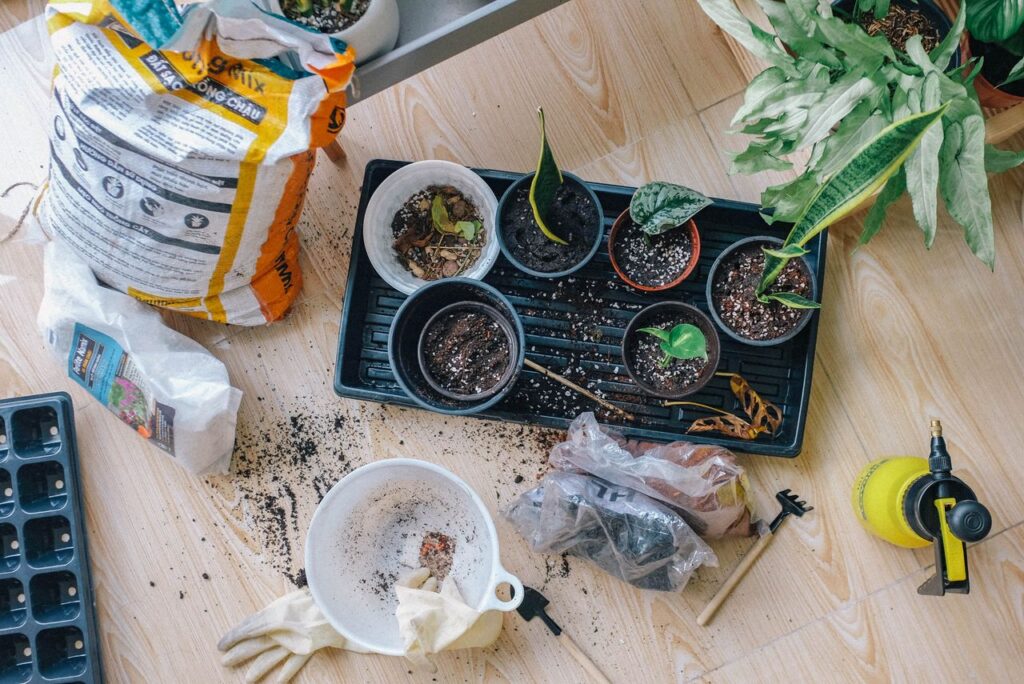
Living in a compact apartment usually means making every square foot count, especially when seasonal plant care rolls around.
When I repotted my first Monstera on a tiny living room rug without proper gear, I spent two full hours sweeping up stray soil and scrubbing dark dirt stains off my hardwood floorboards.
That messy experience taught me that repotting indoors doesn’t require a spacious backyard or an outdoor workbench.
With the right compact gear, you can repot your entire collection cleanly, efficiently, and without turning your living space into a total disaster zone. In this guide, I will break down the essential tools every urban plant parent needs to build the ultimate apartment repotting kit.
The Core Essential: A Waterproof Repotting Mat
If you buy only one specialized tool for indoor plant care, make it a collapsible, waterproof repotting mat.
These clever tarps feature snap-up corner buttons that create raised walls, keeping dry soil, loose bark, and stray water completely contained while you work on your coffee table or kitchen counter.
They roll up into a compact cylinder that slides easily into a closet, drawer, or under a couch when you finish your plant maintenance.
Using a repotting mat eliminates the need for messy newspapers or flimsy plastic trash bags spread across your living room floor.
When you finish repotting, simply unbutton one corner, tip the leftover dirt back into your soil container, and wipe the waterproof mat clean with a damp cloth.
Soil Essentials: Chunky Substrates and Raw Mixes
Keeping massive, heavy bags of commercial potting soil in a small apartment closet takes up valuable real estate and risks attracting unwanted household pests.
Instead, build a custom soil station using stackable, airtight plastic bins that keep raw ingredients fresh, dry, and insect-free in your storage area.
A versatile apartment soil kit should include a light base like coco coir alongside chunky additives that promote rapid root drainage and aeration.
- Coco Coir Blocks: Compact, dehydrated bricks that expand into fluffy, moisture-retentive substrate when soaked in warm water.
- Coarse Perlite or Pumice: Lightweight volcanic minerals that prevent soil compaction and create vital air pockets around lower roots.
- Orchid Bark Chips: Chunky bark that adds physical structure, mimicking the natural rainforest floor that climbing aroids love.
- Worm Castings: An odorless, organic natural fertilizer that supplies gentle nutrients without overwhelming small indoor spaces.
The Advantages of Storing Expanding Soil Bricks
For apartment dwellers with limited closet space, compressed coco coir bricks are absolute lifesavers compared to traditional soil bags.
A single compact block weighing less than two pounds expands into several gallons of fluffy, usable potting substrate within fifteen minutes of adding water.
Storing compressed bricks allows you to keep an abundant supply of fresh soil substrate on hand without cluttering your entryway or utility closet.
Because coir bricks are completely dehydrated during manufacturing, they also have a virtually indefinite shelf life and won’t harbor hidden fungus gnat eggs.
Essential Hand Tools for Small Workspaces
Outdoor garden shovels and heavy iron trowels are far too clumsy for delicate houseplants living in small 4-inch or 6-inch pots.
Investing in a few miniature hand tools gives you total precision, protecting delicate feeder roots and keeping loose dirt off your floor.
A soil scoop with high side walls allows you to pour fresh potting mix directly around narrow root balls without spilling dirt over the planter rim.
Flexible potting tarps, root-untangling hooks, and narrow precision trowels make working in tight apartment corners smooth and completely effortless.
I keep my small hand tools organized in a portable canvas caddy that stores neatly on a bookshelf alongside my favorite plant books.
Apartment Repotting Kit Gear Checklist
To help you assemble your compact repotting setup without overspending or buying unnecessary gear, check out this quick checklist:
| Tool / Item | Primary Apartment Function | Storage Footprint | Essential Level |
| Waterproof Repotting Mat | Contains dirt and water spills on tables or floors | Collapsible / Micro | Absolute Must-Have |
| High-Sided Soil Scoop | Precise soil placement without mess | Fits inside soil bin | High Priority |
| Airtight Storage Bins | Keeps raw soil components fresh and pest-free | Stackable / Closet-friendly | High Priority |
| Bypass Pruning Shears | Trims damaged roots and dead foliage cleanly | Small drawer item | High Priority |
| Root Release Hook | Untangles root-bound soil gently | Pen-sized tool | Nice to Have |
Potting Prep: Nursery Pots and Drainage Solutions
A common mistake apartment gardeners make is planting directly into decorative ceramic pots without proper bottom drainage holes.
Without drainage holes, excess water collects at the base of the planter, creating stagnant pools that lead to rapid root rot and foul odors.
Keeping a stock of lightweight, clear plastic nursery pots in various sizes allows you to double-pot your tropicals easily.
Double-potting means planting your tropical into a plastic nursery pot, then sliding it directly inside a decorative cover pot.
This setup lets you lift the plant out during watering, let excess liquid drain completely in the sink, and return it to your display shelf without mess.
Now that you have your tools ready, watch this quick step-by-step video guide below to see how to repot your houseplant like a pro!
Why Clear Plastic Nursery Pots Are Superior
Using clear plastic pots inside your decorative planters gives you a massive advantage when checking root health and moisture levels.
You can instantly inspect root growth patterns without disturbing the soil matrix or causing unnecessary transplant shock to your foliage.
Clear sides also allow you to see exactly where moisture remains inside the pot, eliminating guesswork during weekly watering routines.
When roots become tightly bound along the inner walls, you will see them immediately, signaling that it is time to move up a pot size.
Clean-Up and Sanitation Must-Haves
Keeping your tools and workspace sterile prevents cross-contamination and keeps your apartment smelling fresh after every repotting session.
Always keep a bottle of 70% isopropyl alcohol and microfiber cloths in your kit to sanitize cutting blades between plants.
A small hand broom and dustpan set reserved specifically for plant care makes sweeping up dry perlite or stray dirt off hard floors quick work.
Store a small container of cinnamon powder in your kit as well; its natural antifungal properties help seal freshly trimmed root wounds before repotting.
Repot Safely in Small Spaces
Repotting your indoor jungle in a small apartment doesn’t have to be a stressful, messy chore that leaves your living room covered in dirt.
By investing in a collapsible waterproof mat, a high-sided soil scoop, and compact storage bins, you can manage repotting season cleanly and efficiently.
Assemble your apartment repotting kit today, roll out your mat, and give your houseplant roots the fresh room they need to thrive!
Want to master more urban plant care strategies? Explore the rest of our blog guides to discover specialized soil recipes, indoor lighting advice, and seasonal maintenance routines tailored for every plant parent!
 Small Spaces
 Turn your small space into an urban jungle! Discover step-by-step how to build a mess-free, freestanding living green wall divider for ultimate apartment privacy.
 Plant Care
 Dust is a silent killer! Learn step-by-step how to clean houseplant leaves naturally to boost photosynthesis, prevent pests, and restore vibrant shine.
 Plant Care
 As a pet owner, bringing new plants into your home can feel like a risky game. Curiosity often gets the […]
