
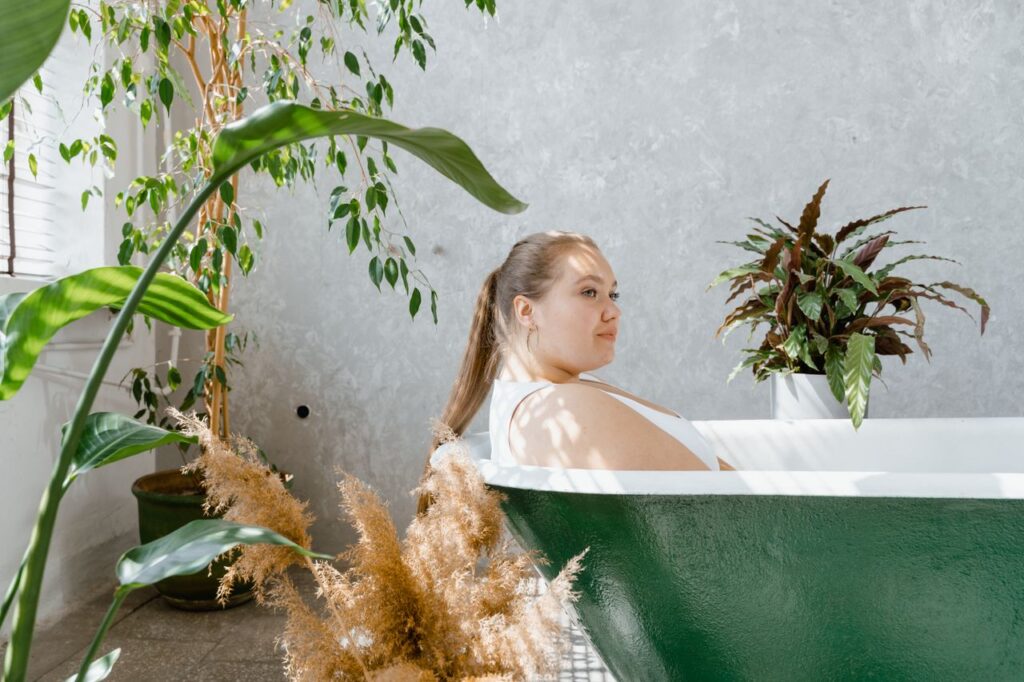
Stepping into a dim, windowless bathroom can often feel uninspiring, but transforming this awkward space into a lush mini-oasis is surprisingly simple.
Early in my plant parent journey, I assumed that a tiny bathroom with a small frosted window was a guaranteed death sentence for tropical foliage.
After trial, error, and a few dropped leaves, I learned that the microclimate of a bathroom—marked by warm steam and elevated air moisture—is actually a dream environment for specific resilient plants.
In this guide, I will share the absolute best small-space foliage options, lighting strategies, and practical care habits to help you turn your compact bathroom into a thriving green retreat.
The Bathroom Microclimate: High Humidity Meets Dim Lighting
Understanding the unique environmental conditions of a small bathroom is the first step to choosing plants that will actually survive there.
Every hot shower creates a surge of relative air humidity, mimicking the steamy, tropical understory conditions of natural rainforests.
However, bathrooms are frequently plagued by poor natural illumination, small frosted glass windows, or complete windowless shadows.
High air moisture speeds up soil drying on the surface, but dim light slows down photosynthesis and water uptake at the root level.
To succeed in a small bathroom, you must select compact species that crave moist air while remaining genetically adapted to low-light environments.
1. The Cast Iron Plant (Aspidistra elatior)
Living up to its rugged name, the Cast Iron Plant is one of the most indestructible green companions you can place in a dim bathroom corner.
It produces broad, deep-green leathery leaves that absorb ambient room humidity without showing signs of leaf tip burn or fungal spotting.
Because it evolved on dark forest floors, it tolerates extreme shade, weak artificial lighting, and erratic watering schedules without dropping leaves.
I keep a compact cultivar sitting on a wooden stool right next to my shower stall, where it thrives on ambient steam and minimal window light.
Essential Bathroom Care
- Placement: Corner floor spots or low stools away from direct foot traffic.
- Watering: Allow the top half of the potting soil to dry out between waterings.
- Light Requirement: Extremely low natural light to medium indirect light.
2. Bird’s Nest Fern (Asplenium nidus)
Unlike fragile maidenhair ferns that crisp up at the slightest breeze, the Bird’s Nest Fern is built for steamy, warm environments.
It features vibrant lime-green, crinkled fronds that sprout out from a central fuzzy rosette, resembling a tiny tropical bird’s nest.
The thick, waxy texture of its fronds holds up remarkably well to heavy steam bursts while soaking in localized air moisture.
Its compact, upright growth habit makes it a perfect green candidate for narrow bathroom countertops, vanity edges, or shallow shelves.
Essential Bathroom Care
- Placement: Countertops, vanity corners, or bright window sills.
- Watering: Keep soil consistently damp, but avoid pouring water directly into the central crown.
- Light Requirement: Medium to low indirect light.
3. ZZ Plant (Zamioculcas zamiifolia)
If your bathroom lacks a real window entirely, the ZZ Plant is one of the few houseplants capable of surviving on light bulb exposure alone.
Its glossy, waxy dark green leaflets reflect overhead bathroom lights, creating a polished, high-end look in small spaces.
Beneath the soil, large potato-like rhizomes store massive amounts of water, making it extremely resistant to rot and neglect.
Its strict vertical growth pattern means it stays compact, never sprawling over your sink basin or interfering with bathroom toiletries.
Essential Bathroom Care
- Placement: Vanity tops, medicine cabinet tops, or windowless corners.
- Watering: Water sparingly once every three to four weeks.
- Light Requirement: Low light, artificial fluorescent light, or shadow zones.
4. Heartleaf Philodendron (Philodendron hederaceum)
For adding graceful, trailing greenery to high bathroom shelving or shower rods, the Heartleaf Philodendron is an absolute classic.
This fast-growing vine features charming heart-shaped green leaves that absorb steam instantly, pushing out fresh growth year-round.
It is far more forgiving of dark, shadowy corners than variegated plants, maintaining its deep emerald foliage color in low light.
You can let its flexible stems cascade naturally over a medicine cabinet or trail along a wall hook near your towel rack.
Essential Bathroom Care
- Placement: High shelves, hanging planters, or top of medicine cabinets.
- Watering: Water when the top inch of potting mix feels dry.
- Light Requirement: Low to bright indirect sunlight.
Small Bathroom Plant Comparison Guide
To help you match your bathroom’s exact layout and lighting conditions to the right plant, check out this reference table:
| Plant Name | Growth Habit | Preferred Moisture Level | Ideal Bathroom Spot |
| Cast Iron Plant | Upright & Broad | Moderate (Let dry 50%) | Dark Corners & Floor Stools |
| Bird’s Nest Fern | Compact Rosette | High (Keep damp) | Vanity Countertops & Windowsills |
| ZZ Plant | Vertical & Glossy | Low (Let dry 100%) | Windowless Ledges & Cabinets |
| Heartleaf Philodendron | Cascading Vine | Moderate (Let dry 25%) | High Shelves & Hanging Hooks |
Avoid common care mistakes in high-humidity spaces! Press play on the practical video guide below for a quick breakdown of bathroom plant do’s and don’ts.
Overcoming Windowless Bathroom Challenges
If your small bathroom relies entirely on artificial light, you can still maintain a thriving green sanctuary with a few clever lighting tweaks.
Standard bathroom LED overhead bulbs left on for eight to ten hours a day provide enough ambient light to keep low-light plants like the ZZ Plant alive.
For faster growth, replace a standard vanity bulb with a full-spectrum LED grow bulb that fits standard lighting fixtures seamlessly.
Alternatively, adopt a plant rotation strategy: swap your bathroom plant with a windowsill plant from your living room every two weeks to recharge its light reserves.
This rotation system allows shade-loving tropicals to rest in high steam while preventing long-term light starvation in windowless rooms.
Preventing Mold, Rot, and Stagnant Soil Issues
While humidity is fantastic for tropical foliage, poor air circulation combined with wet soil can lead to unwanted mold growth on planters.
Because small bathrooms trap moisture, potting soil stays damp significantly longer than it would in an open, airy living room.
Always use lightweight, highly aerated potting mixes containing extra perlite or coarse orchid bark to ensure water drains freely through the pot.
Run your bathroom exhaust fan for twenty minutes after every shower to circulate stagnant air and prevent fungal spores from settling on wet leaves.
Always empty drainage saucers immediately after watering so your planters never sit in stagnant pools of water on wet vanity surfaces.
Elevate Your Daily Routine with Bathroom Greenery
Adding compact, steam-loving houseplants to a small bathroom turns a functional, utilitarian space into a refreshing, spa-like sanctuary.
By selecting low-light champions like the ZZ Plant, Bird’s Nest Fern, or Cast Iron Plant, you avoid plant frustration and enjoy lasting beauty.
Inspect your bathroom layout today, clear off a small corner on your vanity, and welcome a touch of vibrant nature into your morning routine!
Ready to optimize every corner of your home with indoor foliage? Explore the rest of our blog guides to discover compact space layout hacks, potting soil recipes, and expert care tips tailored for urban plant parents!
 Small Spaces
 Turn your small space into an urban jungle! Discover step-by-step how to build a mess-free, freestanding living green wall divider for ultimate apartment privacy.
 Plant Care
 Dust is a silent killer! Learn step-by-step how to clean houseplant leaves naturally to boost photosynthesis, prevent pests, and restore vibrant shine.
 Plant Care
 As a pet owner, bringing new plants into your home can feel like a risky game. Curiosity often gets the […]
