
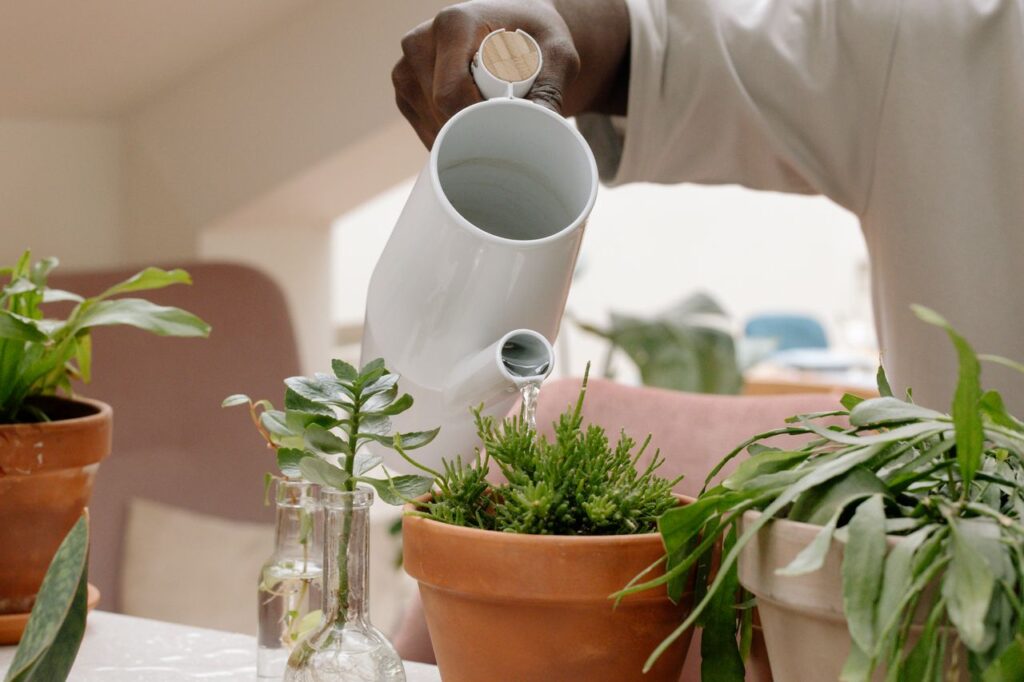
Ask ten indoor plant enthusiasts how they decide when to water, and you will spark an immediate debate.
Half will swear by high-tech soil moisture meters, while the rest insist that using your index finger is the only true way to know what your plants need.
Overwatering remains the leading cause of houseplant mortality in urban homes, making accurate soil assessment essential for any plant parent.
Picking the wrong testing method for your specific pot size or soil type can easily lead to silent root rot or severe dehydration.
So, which soil moisture checking method actually reigns supreme for your indoor jungle? Read on as we analyze the pros, cons, science, and ideal use cases for both techniques so you can make the right choice for your collection.
The Physics of Soil Moisture in Apartment Gardening
Before comparing tools, it helps to understand why checking soil moisture is so tricky in indoor environments.
Unlike outdoor garden beds where excess water drains away endlessly into the earth, potted houseplants exist in closed ecosystems.
When you water a potted plant, gravity pulls the liquid downward, creating what horticulturists call a “perched water table.”
This means the bottom two inches of soil in any pot will always remain significantly wetter and denser than the top layer.
In a small six-inch pot, this moisture gradient is minimal. However, in a deep twelve-inch floor planter, the top three inches of soil can feel as dry as dust while the bottom of the pot harbors a swampy zone of stagnant water.
This hidden moisture divide is precisely where the battle between moisture meters and the manual finger test begins.
The Finger Test: The Natural, Hands-On Classic
The finger test is the oldest diagnostic method in gardening history. You simply insert your index finger two to three inches deep into the potting mix to feel for cool, damp soil.
If the soil feels completely dry and crumbles away from your skin, it is time to water. If it feels cool, moist, and leaves dirt clinging to your skin, you hold off.
The Advantages of Using Your Hands
- Tactile texture feedback: Your skin instantly feels subtle moisture levels and soil structure that a basic metal probe simply cannot evaluate.
- Compaction & health detection: As you press into the pot, you immediately feel if the soil has become rock-hard, hydrophobic, or severely root-bound.
- Zero financial cost: It requires no batteries, zero initial investment, no maintenance, and no additional equipment to store in a tiny apartment.
The Major Downsides
- Shallow reach: In large floor pots, your finger only checks the top layer while the lower root zone may be drowning in water.
- Messy execution: It leaves damp dirt under your fingernails, which becomes annoying when quickly inspecting plants before leaving for work.
- Subjective interpretation: Beginners often struggle to differentiate between soil that is truly damp versus soil that is merely cold from room drafts.
Moisture Meters: Instant Data for Indoor Jungle Parents
A soil moisture meter is a handheld tool featuring one or two metal probes that read electrical conductivity in the soil, translating that signal into a numeric reading on a dial from 1 (dry) to 10 (wet).
You push the metallic probe deep into the root ball near the bottom of the pot, wait a few seconds, and read the display.
The Advantages of Using Probes
- Deep root access: Probes easily reach six to ten inches down into deep planter pots where dangerous water pooling actually occurs.
- Clean and fast: No dirty hands or muddy fingernails while inspecting a massive collection of fifty or more houseplants.
- Clear visual data: Provides beginners with a concrete reference point instead of relying on subjective intuition or guesswork.
The Major Downsides
- False salinity readings: High soil salinity from synthetic fertilizers or heavy tap water minerals trick the electrical sensor into reading “wet” even when soil is bone dry.
- Aerated soil issues: Chunky custom potting mixes containing heavy orchid bark, perlite, or pumice create air pockets that prevent accurate sensor contact.
- Corrosion vulnerability: Leaving cheap metal probes in soil or failing to clean them causes fast oxidation, ruining the sensor’s calibration.
Direct Method Comparison: Finger Test vs. Moisture Meter
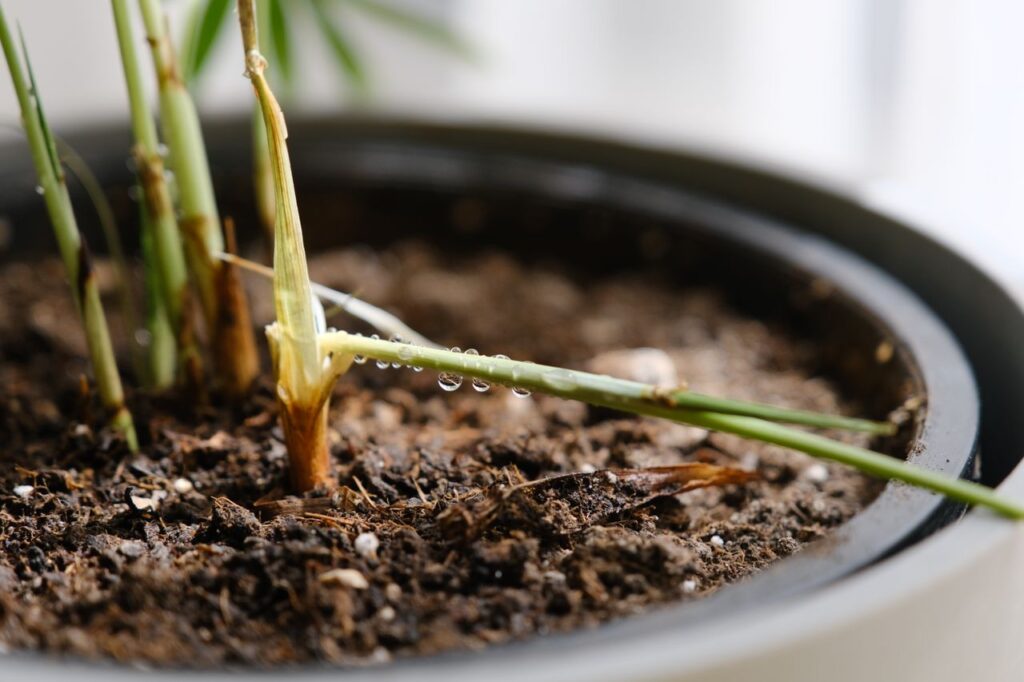
To help you decide which approach fits your indoor plant routine best, here is how both diagnostic techniques stack up side by side across key metrics:
| Feature | The Finger Test | Soil Moisture Meter |
| Accuracy in Chunky Soil | High (Feels real texture and density) | Low (Air gaps warp electrical readings) |
| Reach in Deep Pots | Low (Limited to top 2–3 inches) | High (Reaches up to 10 inches deep) |
| Cost & Maintenance | $0 (No tools or maintenance needed) | $10–$20 (Requires clean, dry probe tips) |
| Ease of Use for Beginners | Moderate (Requires practice and intuition) | High (Simple visual dial with clear numbers) |
| Risk of Root Damage | Low (Gentle, adaptable human touch) | Moderate (Can scrape or break thick roots) |
| Speed for Large Collections | Slow (Must clean hands between pots) | Extremely Fast (Quick wipe and insert) |
When to Use Each Method in Your Plant Routine
Instead of picking just one tool, experienced indoor gardeners use both methods strategically based on pot size, plant species, and soil composition.
Use the Finger Test For:
- Chunky aroid mixes: Plants like Monstera, Philodendron, and Anthurium grown in bark-rich mixes where probes struggle with air gaps.
- Small nursery pots (under 6 inches): Small pots dry quickly and uniformly, making deep probe penetration unnecessary.
- Fragile, fine root systems: Sensitive plants like Ferns, Calatheas, or Peperomias whose delicate feeder roots can tear under heavy metal probes.
Use a Moisture Meter For:
- Deep floor planters: Large pots holding Fiddle Leaf Figs, Bird of Paradise, or Palms where water accumulates at the very bottom.
- Dense peat-based mixes: Standard indoor potting soils that retain moisture uniformly throughout the container.
- Fast morning routine checks: Quickly scanning a large collection of medium-to-large pots without getting dirt on your clothes or hands.
The Secret Hybrid Method: The Pot Lift Technique
If you want the ultimate test that bridges the gap between probes and fingers, master the Pot Lift Technique.
Water has significant mass. A ten-inch pot filled with saturated potting mix can easily weigh fifteen pounds. That exact same pot will drop to under five pounds when the soil is completely dry.
Get into the habit of picking up your potted plants immediately after a deep watering session to register their maximum wet weight.
Then, pick them up again right before you water. Within a few weeks, your muscle memory will tell you instantly whether a plant needs hydration just by lifting it an inch off its shelf.
Step-by-Step Routine to Prevent Diagnostic Errors
1. Check your soil composition first: Identify chunky bark versus dense peat.
If your plant is in a chunky aroid mix, rely on your finger or pot weight. If it is in dense indoor potting soil, feel free to use a moisture probe.
2. Insert tools gently near the inner edge: Avoid forcing probes through thick root balls.
Never jam a metal probe directly into the center crown of the plant. Always insert it halfway between the main stem and the inner rim of the pot.
3. Wipe probes immediately after use: Corrosion ruins calibration fast.
Never leave a soil moisture meter sitting inside a pot. Pull it out immediately, wipe the metal shaft clean with a dry cloth, and store it in a dry drawer.
4. Cross-verify before pouring water: When two tests conflict, weight wins.
If your moisture meter reads “dry” but the pot feels heavy and anchored, do not water! Trust the physical weight of the container over the mechanical dial.
The Verdict
So, which one is actually better? The answer depends entirely on your pot sizes and your soil mix.
For small pots, delicate roots, and chunky custom soil mixes, the Finger Test remains king due to its reliability and tactile accuracy.
However, for deep floor planters and dense peat soils, a Moisture Meter is an indispensable safety net that prevents hidden root rot at the bottom of the container.
Combine both techniques with the pot lift method, and your houseplant collection will thrive season after season without missing a beat.
 Small Spaces
 Turn your small space into an urban jungle! Discover step-by-step how to build a mess-free, freestanding living green wall divider for ultimate apartment privacy.
 Plant Care
 Dust is a silent killer! Learn step-by-step how to clean houseplant leaves naturally to boost photosynthesis, prevent pests, and restore vibrant shine.
 Plant Care
 As a pet owner, bringing new plants into your home can feel like a risky game. Curiosity often gets the […]
