
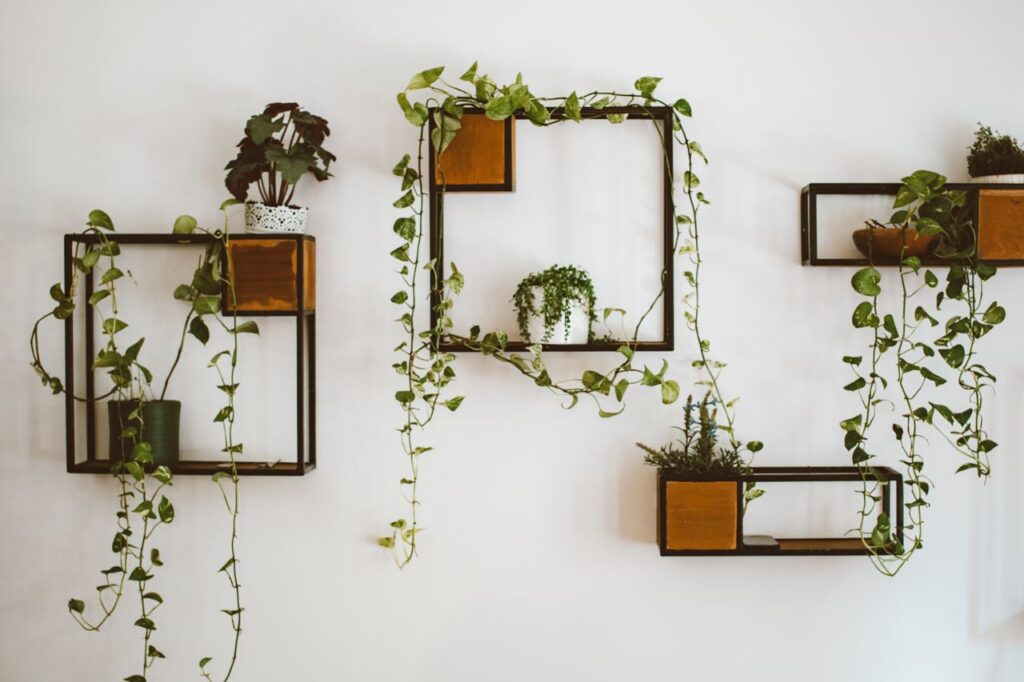
The modern urban apartment dream is to live inside a serene, green oasis. However, the reality of city living usually involves strict floor plans, cramped quarters, and limited windowsill real estate.
The moment your desk, coffee table, and kitchen counters fill up with potted tropicals, moving around your own home starts to feel like an obstacle course.
Most indoor gardeners hit a wall simply because they view their living space in two dimensions—focusing entirely on flat, horizontal surfaces.
If you are out of floor space, the solution isn’t to stop collecting plants. You just need to look up.
Vertical indoor gardening allows you to transform blank walls, unused ceiling corners, and empty window frames into living architectural features.
In this complete guide, we will break down how to use floating shelves, hanging hooks, and wall planters safely, stylishly, and without losing your apartment security deposit.
Why Vertical Gardening Is a Game-Changer for Apartments
Designing upward rather than outward does far more than just save valuable floor space.
It fundamentally alters how light, airflow, and aesthetics work inside a compact home.
Standard room layouts force plants into lower shadow zones beneath furniture lines.
Going vertical lifts your green collection directly into prime ambient light corridors near upper window frames.
- Better Light Access: Elevating foliage brings light-hungry plants closer to overhead and high-window sun exposure.
- Improved Air Circulation: Hanging foliage benefits from natural room airflow, reducing fungal dampness on leaf surfaces.
- Pet and Child Safety: Keeping delicate or toxic plants like Pothos and Philodendrons up high keeps curious paws and little hands safe.
1. Floating Wall Shelves: Sturdy and Architectural
Floating shelves are the backbone of any serious vertical plant wall. They provide a rigid, flat platform capable of supporting heavier ceramic, terracotta, or concrete pots that hanging cords cannot hold.
When installing shelves for plants, weight management is critical. A ten-inch ceramic pot filled with saturated soil can easily exceed fifteen pounds.
Mounting directly into wall studs using heavy-duty brackets is mandatory for heavy displays.
Best Plant Choices for Shelves
Floating ledges are perfect for creating dynamic visual height contrast by mixing upright species with trailing vines.
- Upper Shelves: Place trailing vines like String of Hearts, Philodendron Brasil, or English Ivy on top ledges so their tendrils drape downward like a green waterfall.
- Middle Shelves: Use bushy, mid-height foliage like Calatheas, Peperomias, or Anthuriums to fill horizontal gaps.
- Lower Shelves: Feature tall, structural statement plants like compact Sansevieria or young Monstera Deliciosa.
2. Hanging Hooks and Macramé: Overhead Elegance
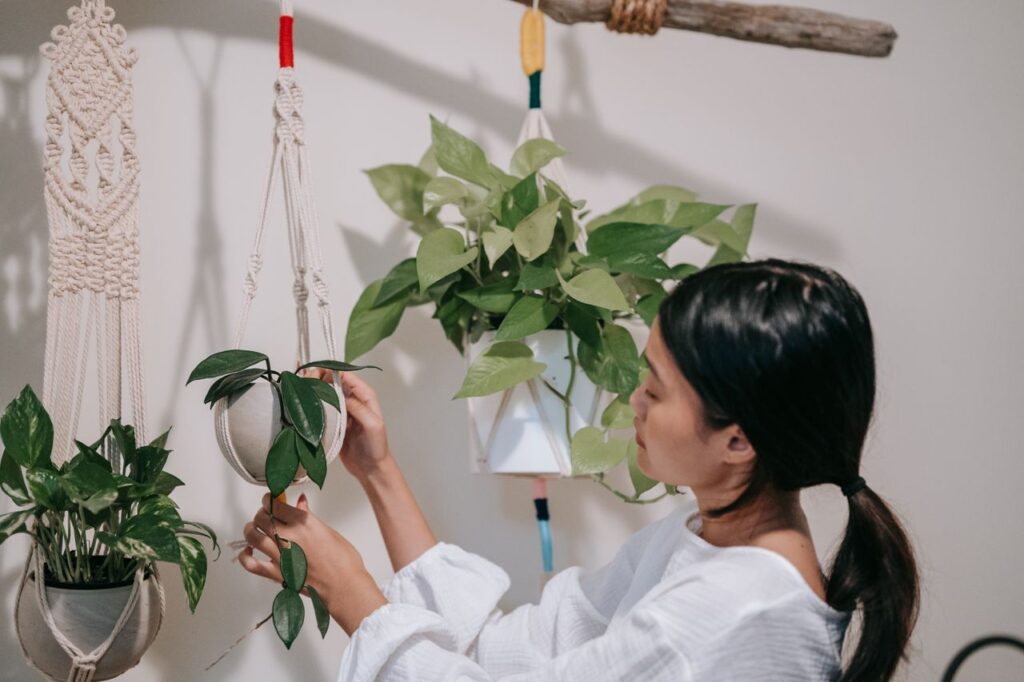
Empty room corners and ceiling voids near windows are prime real estate for hanging displays.
Suspending plants from above creates immediate depth and draws the eye upward, making compact rooms feel taller.
For renters who cannot drill deep holes into ceilings, tension rods fitted securely inside window frames offer a heavy-duty, drill-free hanging bar.
Safe Installation Practices
- Locate Joists for Ceiling Hooks: If drilling into drywall ceilings, always use toggle bolts rather than basic plastic wall anchors. Toggle bolts spread the weight load across the inner drywall surface.
- Use S-Hooks for Versatility: Hang macramé or leather plant straps from sturdy metal S-hooks attached to curtain rods or wall brackets for easy removal during watering days.
- Opt for Lightweight Nursery Pots: Keep the inner container plastic to save weight, slipping it inside a decorative light seagrass basket or woven holder.
3. Modular Wall Planters: Living Wall Art
Modular wall planters attach directly to flat surfaces, creating a continuous panel of foliage that looks like a custom botanical installation.
Modern systems range from individual magnetic pots to integrated drip-tray wall pockets.
The primary challenge with wall-mounted pots is drainage management. Since you cannot let water drip directly down your drywall, choosing the right container setup is crucial.
Managing Drainage on Walls
- Cachepot Systems: Mount an outer sealed container permanently to the wall. Insert a slightly smaller plastic nursery pot inside so you can easily pull the plant out for watering at the sink.
- Self-Watering Wall Pots: Use sealed wall pockets equipped with internal sub-irrigation wicks. You simply fill a small side reservoir, preventing water spills entirely.
Want to see how it works in real life? Watch this step-by-step video example of a self-watering plant wall:
Technical Comparison: Vertical Display Systems
Selecting the right vertical display method depends on your wall structure, rental agreement, and budget:
| Display Method | Weight Capacity | Renter Friendliness | Watering Ease | Best For |
| Floating Wooden Shelves | Very High (up to 40+ lbs) | Moderate (Requires screws/anchors) | Easy (Standard pot access) | Heavy ceramic pots & mixed clusters |
| Ceiling Hooks & Macramé | Medium (10–15 lbs) | Low-Moderate (Requires ceiling toggle) | Moderate (Requires stepping stool) | Long trailing vines & hanging ferns |
| Tension-Pole Systems | High (20–30 lbs) | High (Zero drilling required) | Easy (Adjustable arm heights) | Tight room corners & studio apartments |
| Modular Wall Pockets | Low-Medium (3–8 lbs) | Moderate (Requires wall anchors) | Requires Care (Self-watering wicks) | Succulents, herbs & lightweight foliage |
| Window Suction Ledges | Low (3–5 lbs) | Extremely High (Tool-free) | Very Easy (Direct shelf access) | Sun-loving propagation jars & mini cacti |
Step-by-Step Guide to Planning a Plant Wall
1.Measure your sunlight patterns: Identify light exposure levels.
Map out where natural light falls across your blank walls throughout the day before buying mounting hardware or plants.
2. Calculate total wet weight load: Use drywall anchors or studs.
Add the combined weight of your pots, plants, and saturated soil. Ensure your shelves or hooks are rated for at least twice that total weight.
3. Mix leaf textures and growth habits: Avoid visual monotony on shelves.
Combine upright growers, bushy foliage, and cascading vines on the same vertical structure to create a natural, layered forest effect.
4. Establish a practical watering routine: Prevent wall water damage.
Choose lightweight plastic inner liner pots or self-watering inserts so you can water your plants without damaging surrounding drywall.
3 Common Vertical Gardening Mistakes to Avoid
- Ignoring Overhead Heat Zones: Warm air rises. Plants positioned high up on top shelves or near ceilings dry out significantly faster than plants on low tables. Check top-shelf soil moisture frequently.
- Overloading Drywall: Never rely on basic plastic expansion anchors for heavy plant shelves. Always anchor into wood studs or use heavy-duty toggle bolts to prevent catastrophic wall collapses.
- Blocking Walkways: Ensure hanging pots clear head height in high-traffic hallways, and verify that lower floating shelves do not stick out far enough to be bumped into by passing shoulders.
Expand Upward
Vertical indoor gardening liberates you from the constraints of limited floor space.
By utilizing floating shelves, ceiling hooks, and modular wall systems, you can turn any cramped apartment into a vibrant, multi-layered botanical sanctuary.
Take a look at your blank walls today, pick your favorite vertical method, and start growing upward!
Don’t forget to check out our other articles for more tips. We know your urban jungle will thrive!
 Small Spaces
 Turn your small space into an urban jungle! Discover step-by-step how to build a mess-free, freestanding living green wall divider for ultimate apartment privacy.
 Plant Care
 Dust is a silent killer! Learn step-by-step how to clean houseplant leaves naturally to boost photosynthesis, prevent pests, and restore vibrant shine.
 Plant Care
 As a pet owner, bringing new plants into your home can feel like a risky game. Curiosity often gets the […]
