
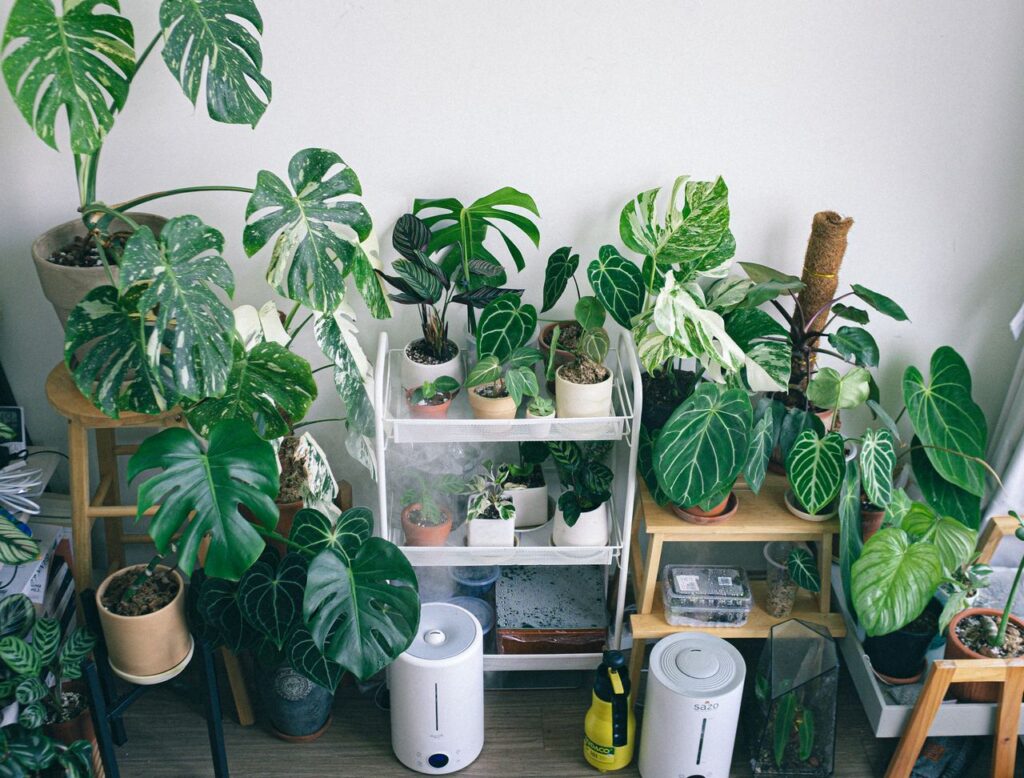
Have you ever noticed the tips of your favorite Calathea or fern turning brown, crispy, and dry despite your best watering efforts? You are definitely not alone, as dry indoor air is one of the most common hidden struggles faced by urban plant parents across the globe.
While tropical foliage naturally craves high moisture levels, buying an electronic humidifier isn’t always mandatory for every indoor setup.
In this guide, we will break down when your plants genuinely need extra air moisture, how to spot low humidity stress, and the best budget alternatives to keep your foliage vibrant.
Understanding Humidity in the Average Home
To understand why tropical houseplants suffer indoors, it helps to look at the massive gap between their natural environments and our modern living rooms.
Most popular houseplants originate from warm, dense tropical rainforests, where relative humidity levels comfortably hover between 70% and 90% year-round under the forest canopy.
In contrast, typical indoor residential air usually ranges between 30% and 50% humidity, dropping even lower during cold winter months when home heating runs continuously.
When surrounding air becomes too dry, plants lose moisture through their foliage much faster than their root systems can absorb it from the potting mix.
This rapid evaporation causes delicate leaf cells to collapse, leading to unsightly brown margins, curling edges, and stunted, misshapen new leaves.
Clear Signs Your Houseplants Need More Moisture
Before investing in new electronic gadgets, you should observe how your plants are responding to your home’s current ambient air quality.
Plants communicate environmental stress through distinct visual cues on their newest foliage and outer leaf margins:
- Crispy Brown Leaf Tips: Leaf edges feel papery, dry, and brittle to the touch, especially on thin-leaved tropical species.
- Curling or Drooping Leaves: Foliage rolls inward tightly to preserve precious moisture and reduce surface area exposure to dry air.
- Stuck New Leaves: Fresh leaves struggle to unfurl from their sheaths, often emerging torn, crinkled, or permanently misshapen.
- Increased Pest Susceptibility: Pests like spider mites thrive in dry indoor air and rapidly multiply on moisture-stressed foliage.
High-Humidity Lovers vs. Low-Humidity Champions
Not all houseplants demand the same atmospheric moisture levels to look their best; knowing your plants’ natural limits saves you unnecessary effort.
Categorizing your collection based on native habitat allows you to group plants with similar care needs together for easier daily maintenance:
| Plant Category | Popular Examples | Target Humidity Level | Sensitivity Level |
| High Humidity Cravers | Calathea, Ferns, Fittonia, Orchids | 60% to 80% | Extreme (Crisps quickly in dry air) |
| Moderate Moisture | Monstera, Philodendron, Pothos, Anthurium | 40% to 60% | Moderate (Adaptable to typical home air) |
| Low Humidity Champions | Snake Plant, ZZ Plant, Cacti, Succulents | 10% to 30% | Low (Thrives in dry indoor air) |
The Science of Plant Transpiration and Humidity
To really grasp why humidity matters so much, it helps to look at how a plant breathes through microscopic leaf pores called stomata.
When surrounding air is humid, stomata open wide to take in carbon dioxide for photosynthesis without losing excessive moisture to the environment.
However, when humidity drops sharply, the dry air acts like a sponge, pulling water vapor rapidly out of the open stomata.
To protect itself from drying out, the plant forcibly closes its stomata, which shuts down active photosynthesis and slows overall growth to a crawl.
Providing adequate atmospheric moisture keeps these microscopic pores functioning properly, allowing your tropicals to grow faster, larger, and healthier foliage.
Here are some humidifier options for you. Check it out!
When a Humidifier Is Absolutely Essential
If your collection features delicate ferns, rare Anthuriums, or drama-prone Calatheas, relying on passive moisture hacks usually isn’t enough to prevent tip burn.
A cool-mist ultrasonic humidifier is the single most efficient tool for raising ambient moisture levels in a dedicated plant room or small living space.
Humidifiers allow you to dial in precise humidity targets, ensuring your high-value tropicals receive a continuous stream of soft moisture throughout the day.
Running a humidifier during dry winter months also helps prevent spider mite outbreaks, as these microscopic pests hate humid environments.
To prevent white mineral dust from settling on your glossy green leaves, always fill your humidifier tank with filtered, distilled, or rainwater.
Low-Tech Alternatives to Electronic Humidifiers
If you aren’t ready to buy a humidifier or don’t want to deal with cleaning machine tanks every week, several effective low-tech methods exist.
Grouping your houseplants closely together creates a natural microclimate, as plants release water vapor through transpiration, raising local air moisture around their leaves.
Placing your pots on pebble trays filled with water provides another gentle boost; as the water evaporates around the gravel, it hydrates surrounding foliage without soaking roots.
Moving moisture-loving species into naturally humid rooms, like a bright bathroom or kitchen, utilizes everyday steam from hot showers and cooking.
Setting up a glass terrarium or an indoor cloche dome creates a localized high-humidity micro-environment perfect for delicate miniature tropicals.
Why Spraying Leaves with Water Doesn’t Work
One of the most persistent myths in indoor gardening is that misting foliage with a hand spray bottle increases room humidity in any meaningful way.
While misting leaves might feel satisfying, it only raises local air moisture for a brief two or three minutes before evaporating completely into the room.
Frequent leaf misting also leaves standing water droplets on foliage, creating a perfect breeding ground for fungal spots, rot, and bacterial diseases.
Furthermore, water droplets resting on leaves under intense sunlight can magnify light rays, leading to accidental leaf scorching.
Instead of spraying leaves daily with a spray bottle, focus on grouping plants together, using pebble trays, or running an ultrasonic humidifier for lasting results.
Seasonal Adjustments for Indoor Humidity
Indoor humidity levels fluctuate wildly depending on the time of year, requiring a flexible approach to your plant care routine.
During late spring and summer, outdoor humidity rises, open windows bring in fresh air, and your houseplants generally require minimal intervention.
In contrast, autumn and winter bring cold outdoor temperatures and dry indoor heat from radiators, fireplaces, and central heating units.
This artificial heating lowers indoor relative humidity dramatically, often dropping levels well below desert-like thresholds of 20%.
Monitoring your indoor climate with an inexpensive digital hygrometer helps you know exactly when to turn on your humidifier during seasonal transitions.
Balance Your Air Quality for a Thriving Jungle
Deciding whether you need an electronic humidifier ultimately comes down to the specific plant species you collect and your local climate.
If your home is filled with tough Pothos, Snake Plants, and Monsteras, your average room air is likely already sufficient for healthy, robust growth.
However, if you love sensitive ferns and high-maintenance tropicals, adding a cool-mist humidifier will completely transform your plants’ health and stop brown tips forever.
Assess your collection today, check for crispy brown tips, and give your indoor tropicals the moisture boost they need to thrive!
Looking for more practical ways to optimize your home’s microclimate? Explore the rest of our blog guides to discover indoor lighting strategies, soil recipes, and expert watering routines tailored for every plant parent!
 Small Spaces
 Turn your small space into an urban jungle! Discover step-by-step how to build a mess-free, freestanding living green wall divider for ultimate apartment privacy.
 Plant Care
 Dust is a silent killer! Learn step-by-step how to clean houseplant leaves naturally to boost photosynthesis, prevent pests, and restore vibrant shine.
 Plant Care
 As a pet owner, bringing new plants into your home can feel like a risky game. Curiosity often gets the […]
