
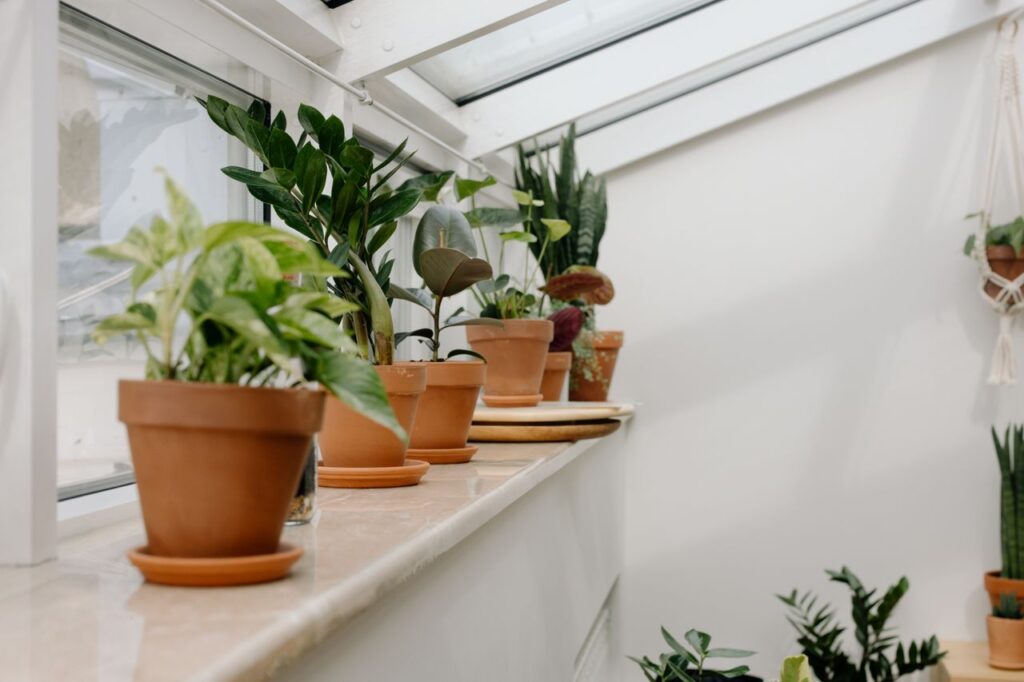
Single potted plants scattered randomly across a room often end up looking like lonely design afterthoughts rather than intentional decor.
Clustering your foliage isn’t just a clever interior styling trick used by professional designers; it actually unlocks a biological secret that helps tropical species thrive inside dry residential homes.
When multiple plants share the same physical footprint, they naturally create a beneficial microclimate while transforming plain furniture into a striking focal point.
In this guide, you will discover the science behind plant grouping, design principles for arranging pots, and practical steps to build a healthier indoor jungle.
The Biological Secret: Creating a Natural Microclimate
In their native rainforest habitats, tropical houseplants grow densely layered together under the forest canopy, constantly sharing moisture and shade.
Bringing that natural clustering behavior into your living room solves one of the biggest challenges of indoor gardening: low ambient air humidity.
Through a natural biological process called transpiration, plant leaves continuously release water vapor into the surrounding air through microscopic pores called stomata.
When you position several houseplants close together, their combined moisture output creates a localized pocket of elevated air humidity around the entire group.
This self-generated humidity dome protects delicate foliage from developing crispy brown tips, reduces leaf curl, and lowers environmental stress for high-moisture species.
Furthermore, surrounding more sensitive plants with broader, tougher foliage shields fragile leaves from sudden drafts caused by air conditioners or home heating vents.
1. Group Plants with Matching Light Requirements
Before arranging pots based on shape or color, you must ensure every plant in the cluster demands the exact same exposure to natural sunlight.
Grouping a sun-hungry succulent next to a shade-loving fern creates a care conflict where one plant will inevitably suffer depending on where you place the pot cluster.
Build your plant groups around shared environmental preferences so every member of the cluster receives its ideal light intensity:
- Bright-Light Cluster: Position cacti, succulents, Sansevieria, and Hoya together on bright, sunny south- or west-facing windowsills.
- Medium Indirect Cluster: Group Monstera, Philodendron, Pothos, and Pilea on bright side tables or plant stands near indirect windows.
- Low-Light Shade Cluster: Combine ZZ Plants, Cast Iron Plants, and Aglaonema in darker room corners or shaded lower shelving tiers.
Mapping your room’s natural illumination ensures that your styled arrangements remain healthy and green for years rather than deteriorating after a few weeks.
2. Combine Varied Heights, Textures, and Growth Habits
Arranging pots of identical sizes and matching foliage shapes creates a flat, visually dull block of green that fails to draw the eye.
To create a dynamic, professional display, combine three distinct growth forms within a single plant cluster: an upright anchor, a bushy filler, and a trailing spiller.
Start with a tall, structural plant like a Snake Plant or ZZ Plant at the back or center of your arrangement to establish immediate vertical height.
Place a bushy, textured medium plant like a Calathea or Peperomia in front to fill out the middle body of the group and add visual weight.
Finish the arrangement with a cascading vine like a Golden Pothos or Heartleaf Philodendron allowed to spill softly over the front planter rim.
This tiered approach ensures that every individual plant gets its moment in the spotlight without being shaded out by neighboring foliage.
Plant Grouping Design Matrix
To help you mix foliage shapes, container heights, and textures effectively, check out this styling layout guide:
| Cluster Position | Role in Arrangement | Ideal Foliage Structure | Example Species Matches |
| Back / Center | Vertical Anchor | Tall, Upright or Architectural | Snake Plant, ZZ Plant, Fiddle Leaf Fig |
| Middle Tier | Texture & Color Filler | Bushy, Rosette, or Broad-Leaved | Calathea, Peperomia, Pilea, Fittonia |
| Front Edge | Cascading Spiller | Trailing Vines & Delicate Soft Stems | Pothos, Heartleaf Philodendron, String of Pearls |
3. The Power of Odds and Container Materials
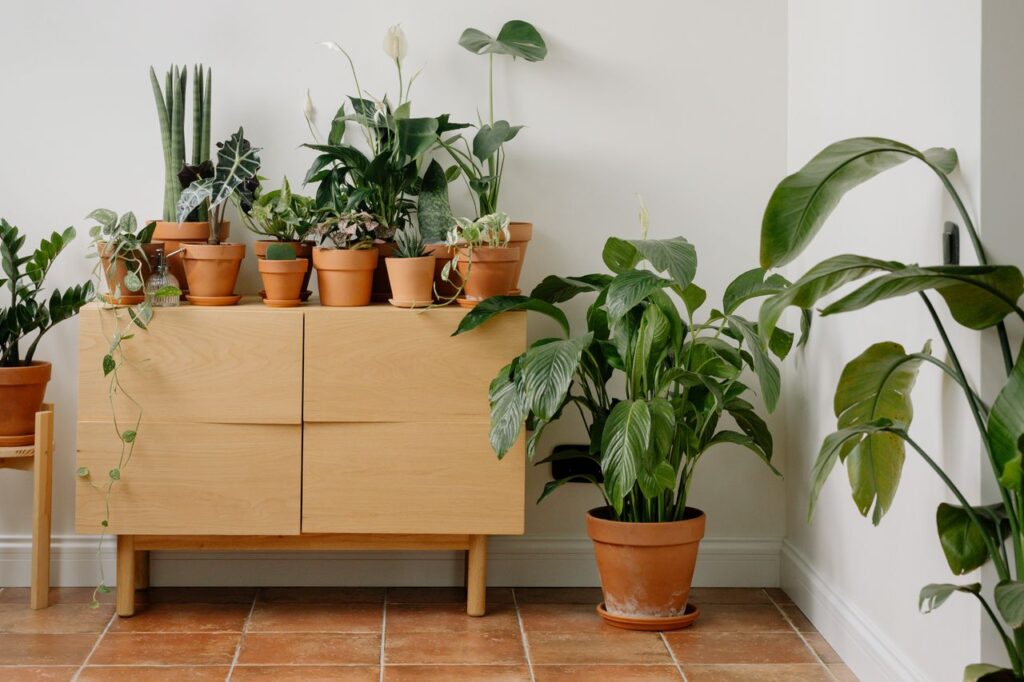
In visual design, grouping items in odd numbers—specifically three, five, or seven—creates a naturally balanced layout that feels organic and relaxed.
Pairing three pots of varying heights together naturally encourages the viewer’s eyes to move across the arrangement in a fluid, triangular pattern.
Unify your plant cluster by using pot materials that share similar tonal palettes or complementary textures, such as raw terracotta, matte ceramics, and woven baskets.
Avoid using chaotic, brightly mismatched plastic pots that distract from the natural colors, leaf patterns, and textures of your living foliage.
Using neutral, earth-toned containers allows the deep green hues and subtle variegation of your plants to remain the main visual feature of the room.
Mixing smooth glazed ceramic surfaces with rough terracotta or woven seagrass adds rich tactile depth without causing visual clutter.
4. Allow Sufficient Airflow to Prevent Pest Outbreaks
While clustering plants raises beneficial air humidity, overcrowding pots too tightly together can create stagnant air pockets that invite unwanted trouble.
When leaves touch too densely without room for air circulation, trapped moisture on leaf surfaces creates an ideal environment for fungal rot and powdery mildew.
Overcrowded clusters also allow opportunistic pests like spider mites, mealybugs, and scale to crawl effortlessly from one pot to another.
Space your pots so that leaves hover close to one another without completely tangling or smothering surrounding foliage.
Maintaining a gap of two to three inches between planter rims ensures air flows freely while still trapping that sweet spot of elevated humidity.
Running a small, low-noise circulation fan nearby ensures fresh air moves continuously through the foliage canopy, keeping your plant cluster healthy and pest-free.
5. Simplify Your Routine with Grouped Watering
Clustering your houseplants together on a single tabletop, shelf, or plant stand streamlines your weekly care routine significantly.
Instead of carrying a heavy watering can back and forth across multiple rooms, your entire collection is concentrated in centralized care stations.
Grouping species with matching watering frequencies means you can check soil moisture levels and water several pots in a single efficient sweep.
For example, placing all your drought-tolerant succulents together on a sunny windowsill means you only need to visit that station once every three weeks.
Group moisture-loving tropicals together on a shared pebble tray filled with water to boost local atmospheric humidity even further without extra work.
Centralizing your collection makes inspecting leaf undersides for early pest signs quick, easy, and seamless during your weekly maintenance sessions.
6. Rotating Your Clusters for Balanced Growth
Houseplants placed in a cluster naturally reach toward the nearest light source, which can cause foliage on the back side to thin out over time.
To maintain a full, symmetrical appearance across all members of your plant group, incorporate a quick rotation step into your care schedule.
Every time you water your cluster, give each individual pot a quick quarter-turn so all sides receive balanced light exposure.
Periodically shifting the positions of the pots within the group—swapping which plant sits on the left versus the right—ensures that smaller plants don’t get permanently shaded out by faster-growing neighbors.
This simple habit keeps your plant grouping looking full, lush, and evenly developed from every angle in the room.
Bring Harmony and Growth to Your Home Jungle
Grouping indoor plants together bridges the gap between artistic interior decoration and smart biological plant care.
By aligning light requirements, mixing foliage heights, and maintaining adequate air movement, you create a self-supporting indoor ecosystem that elevates your space.
Re-evaluate your single potted plants today, group three of them together on a sunny side table, and watch your indoor jungle thrive!
Ready to explore more creative houseplant styling and maintenance strategies? Explore the rest of our blog guides to discover compact space layouts, specialized soil recipes, and expert care routines for every plant parent!
 Small Spaces
 Turn your small space into an urban jungle! Discover step-by-step how to build a mess-free, freestanding living green wall divider for ultimate apartment privacy.
 Plant Care
 Dust is a silent killer! Learn step-by-step how to clean houseplant leaves naturally to boost photosynthesis, prevent pests, and restore vibrant shine.
 Plant Care
 As a pet owner, bringing new plants into your home can feel like a risky game. Curiosity often gets the […]
