
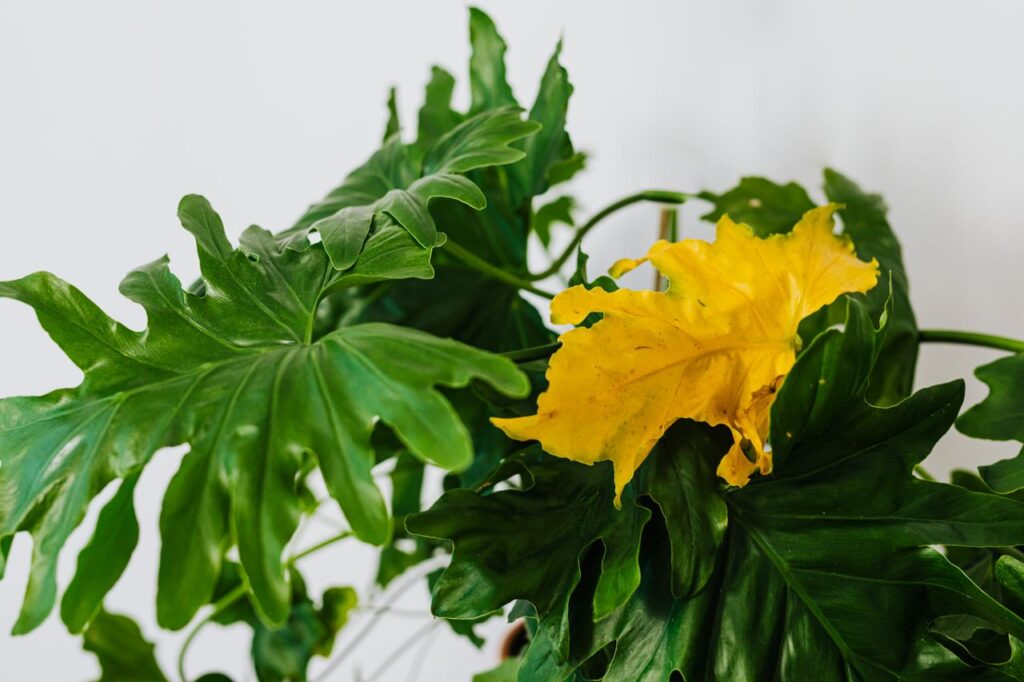
I still remember the absolute panic I felt years ago when my favorite Monstera Deliciosa started dropping yellow leaves like crazy.
I was checking it every morning, watching once-vibrant green foliage fade into a sad, sickly butter-yellow hue, and I had no idea what I was doing wrong.
Chlorosis—the technical term for chlorophyll loss—is your plant’s way of screaming for help. It is a clear visual signal that something in its environment has swung completely out of balance.
The good news? Yellowing foliage is rarely an instant death sentence if you catch it early.
In this guide, I will share the 5 most common causes behind yellowing leaves based on my own trial-and-error, along with the exact fixes I use to bring my houseplants back to life.
1. Overwatering: The Mistake I See Most Often
If I had a dollar for every time I accidentally suffocated a plant in my early gardening days, I could buy a whole greenhouse.
Overwatering is, without a doubt, the number one killer of indoor plants, and it is the primary culprit behind mysterious yellow leaves.
When you pour water into a pot too frequently, you fill all the tiny air pockets in the soil mix.
Without oxygen, the roots cannot breathe, perform gas exchange, or absorb nutrients. Eventually, the subterranean roots rot away, leaving the plant completely unable to sustain its top foliage.
How I Diagnose Overwatering in My Collection
- Foliage Texture: The yellow leaves feel soft, limp, and almost mushy to the touch rather than dry or papery.
- Symptom Location: Discoloration starts on the bottom, older leaves near the base of the soil.
- Pot Environment: The soil stays damp for weeks, smells stagnant, or attracts pesky fungus gnats around the rim.
When I suspect overwatering, I immediately halt all watering and check the drainage holes.
If the potting mix is totally waterlogged, I slide the plant out of its container, prune away any black or foul-smelling roots with sanitized shears, and repot it into a fresh, airy soil mix with plenty of perlite.
2. Underwatering: Chronic Drought and Stress
On the flip side, being too stingy with water causes a completely different kind of stress.
When a plant suffers from chronic drought, it loses the internal cell pressure required to transport vital liquid nutrients up its stems.
To survive an extended dry spell, the plant makes a strategic sacrifice.
It pulls moisture and mobile nutrients out of its oldest leaves to keep the central growing tip alive, turning those lower leaves bright yellow before dropping them entirely.
How to Identify a Thirsty Plant
- Crispy Texture: The yellowing leaves feel thin, dry, and brittle, often curling inward with crispy brown tips.
- Lightweight Pot: The entire planter feels surprisingly light when you lift it, and the soil block has pulled away from the inner edges of the pot.
- Drooping Stems: The whole plant looks sad, limp, and visibly deflated.
My go-to fix for a bone-dry plant is a deep bottom-watering session.
I place the entire pot in a sink filled with two inches of lukewarm water for about twenty minutes, allowing the root ball to soak up moisture evenly from the bottom up.
3. Light Stress: Direct Scorch or Deep Shade
Light is fuel for indoor tropicals, directly driving photosynthesis and chlorophyll production.
In my experience, messing with a plant’s light routine triggers rapid leaf discoloration, but the pattern depends on whether it is getting too much sun or sitting in dark shade.
Too Little Light
When I tried keeping a Pothos in a dim hallway with no direct window line, it quickly started shedding lower leaves.
Without adequate light energy, the plant simply cannot support a dense canopy of foliage, so it sheds older leaves to survive on less power.
Too Much Light
Placing shade-loving species like Calatheas or delicate Ferns on a scorching south-facing windowsill will fry their leaf cells.
The foliage takes on a washed-out, bleached yellow look, often accompanied by dry, straw-colored sunburn patches right in the middle of the leaf blade.
I always recommend researching where your plant grows in the wild.
Move light-starved plants directly into the soft, bright ambient light of an eastern or western window, and pull sun-scorched plants a few feet back from harsh afternoon glass.
My Quick Diagnostic Guide for Discolored Leaves

Whenever a plant in my apartment starts turning pale, I use this mental checklist to quickly zero in on the root cause:
| Symptom Pattern | Root Cause | Leaf Texture | My Immediate Action Step |
| Lower leaves soft & yellow | Overwatering / Root Rot | Soft, mushy, damp | Pause watering; check for mushy roots |
| Crispy edges & curling leaves | Underwatering / Dry Air | Dry, papery, brittle | Give a deep soak; boost room humidity |
| Bleached, faded yellow spots | Direct Sunburn | Rough, bleached | Move pot away from harsh direct sunlight |
| Pale overall yellowing & slow growth | Nutrient Deficiency | Normal, thin | Feed with diluted organic liquid fertilizer |
| Mottled yellow dots & fine webs | Pest Infestation | Sticky, pitted surface | Isolate pot; spray thoroughly with neem oil |
4. Nutrient Deficiencies: Hungry Soil
Potting soil does not contain a forever supply of plant food.
Every time you water your houseplants, dissolved minerals flush out through the bottom drainage holes while the growing roots consume whatever nutrients remain inside the pot.
When soil becomes depleted of essential building blocks—particularly nitrogen and iron—chlorophyll production drops sharply.
- Nitrogen Depletion: Causes a slow, uniform yellowing across older, lower leaves while overall growth stalls.
- Iron Deficiency: Triggers interveinal chlorosis, where new, young leaves turn yellow while the veins stay distinctively dark green.
If your plant has been sitting in the exact same soil mix for more than a year without fresh plant food, it is likely starving.
During the active spring and summer growing months, I feed my collection monthly using a balanced, diluted liquid fertilizer rich in micronutrients.
5. Pests: Hidden Sap-Sucking Bugs
Houseplant pests are sneaky, resilient, and seem to appear out of nowhere.
Sap-sucking insects like spider mites, mealybugs, scale, and thrips love nothing more than drilling tiny holes into your plant’s leaves to drain its sap.
As these pests pierce individual leaf cells, they destroy localized pockets of chlorophyll, leaving behind a telltale speckled or mottled yellow pattern across the foliage surface.
How I Spot Pest Damage Early
- Speckled Pattern: Fine, yellow pinprick dots scattered randomly across the leaf rather than a solid color shift.
- Physical Clues: Delicate silk webbing underneath leaves (spider mites) or sticky residue on the top of leaves (scale or aphid honeydew).
Whenever I spot pests, I isolate the infected plant from my collection immediately to prevent the infestation from spreading.
I take the plant to the shower, rinse off the foliage under a gentle spray, and treat the leaf undersides with organic insecticidal soap or neem oil spray once a week until they are completely gone.
Want to see how to treat your plants safely? Check out this practical video walkthrough below before reading the full guide!
Should You Prune Yellow Leaves?
I get asked this question all the time, and my answer is always a firm yes, clip them off.
Once a leaf turns completely yellow, its chlorophyll is gone and it can no longer photosynthesize or produce energy for the plant.
Leaving dead or dying foliage attached forces the plant to waste valuable energy attempting to repair tissues that are already gone.
I take a pair of sharp pruning shears, sanitize the blades with rubbing alcohol, and snip the yellow leaf off right where the stem meets the main stalk.
Removing dead leaves cleans up the look of your plant, improves airflow around the soil line, and allows the plant to redirect all its strength into producing fresh, healthy green leaves.
Turn Your Yellow Leaves Into Your Best Plant Care Lesson
Yellow leaves are not a sign that you are a bad plant parent—they are simply your plant’s way of communicating with you.
By taking a systematic approach to evaluating your soil moisture, light levels, feeding routine, and pest checks, you can easily diagnose the issue and turn things around.
Pay close attention to what your plants are telling you during your weekly checks, make small adjustments as needed, and watch your indoor jungle thrive!
Loved these tips? Don’t stop your plant journey here! Be sure to explore our other articles on the blog for expert care guides, styling inspiration, and troubleshooting tips to help your urban jungle flourish.
 Small Spaces
 Turn your small space into an urban jungle! Discover step-by-step how to build a mess-free, freestanding living green wall divider for ultimate apartment privacy.
 Plant Care
 Dust is a silent killer! Learn step-by-step how to clean houseplant leaves naturally to boost photosynthesis, prevent pests, and restore vibrant shine.
 Plant Care
 As a pet owner, bringing new plants into your home can feel like a risky game. Curiosity often gets the […]
